
'I toh don't even understand making crores because I have never done such a commercially hit film in my life.' 'It's unbelievable for me.'

With inflation down, the government's twin deficits are largely under control.

The stakes are high and it is not certain that slow-moving foreign office bureaucracies can measure up to the challenges being thrown up, says Hardeep S Puri.
However, independent economists are not as gung-ho as the finance ministry over the likelihood of deficit target being met this time around, says Indivjal Dhasmana.
.jpg)
The creation of the High Level Political Forum was one of the key decisions of the Rio+20 Conference.

Glimpses of I-Day celebrations across India.

It entered India in 2006, with the aim of tapping the promising consumer market.

The biggest winner was Lok Sabha Speaker Sumitra Mahajan who ran her ship with self-confidence and aplomb.
The real danger in India is not majoritarianism but minorityism, a bane we have already experienced. Majoritarianism in the India context means plurality and tolerance. No one needs to fear, says Vivek Gumaste

The President said Indian economy grew at 5.7 per cent during the first quarter of 2014-15.

India must reckon with the possibility that it will struggle to attract higher overseas investment.

Modi govt must implement few policy measures which it announced in Budget 2015.
The RBI expects change, presumably commencing in the next Budget, but must hold its current view until this actually happens.
Finance minister Arun Jaitley has delivered a Arun Jaitley delivered a bold, far sighted budget
The optimism in global markets could help India as the rebound in GDP is expected to continue and get more broad-based.

Sudheendra Kulkarni pays tribute to friend, poet and Dalit activist Namdeo Dhasal who passed into the ages on Wednesday.

The long-term growth perspective or potential for India is one of the highest in the Asia Pacific region.

Once these banks start showing losses, they will not be able to pay dividends to the government nor pay taxes, which will further aggravate the situation for the government as its return on investment as an investor would be very negligible for the next few years, says M V Subramanian.

India is also exploring that way but the strength of the Indian economy was such that not even one bank was threatened, not even one insurance company was threatened, and we were able to withstand the shocks.
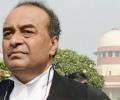
'Serving as the AG is one way of giving back to society or to the profession from which you have earned your name, fame, money and reputation. A lawyer practises for only about 50 years. I have already put in 35 years. If I put in 40 or 50 years, out of which if I take five or 10 years to give back to the profession, it's not a big deal.'

The BRICS summit offers Modi an excellent platform to reach out to world leaders and conduct diplomacy on the very ticklish issue of reform of the world governance structure, and to exchange notes with his peers on international, regional and bilateral issues on the margins of the meeting, says Rup Narayan Das.

News of all that's transpired on and off the football field.

Things are expected to change dramatically in a few years for urban consumers.

Be a fox by temperament and a hedgehog by conviction, Gaurav Dalmia tells Bhupesh Bhandari. Then, he explains why.

Modi attended the House during Question Hour as Thursday is the day of questions listed against the PM's name.

Jaane Bhi Do Yaaro is one of the best and most uncompromised films of Indian cinema, says Sukanya Verma.

'There is no difference between the earlier government and the present government.' 'They are all following the economic policy based on the Chicago School of thought.' 'This school of thought says the government should have very little role in governing the country and the majority of the work should be handed over to the private sector.' 'This has not succeeded in the US.' 'Yet, it is being tried here by people like Arvind Subramaniam, Arvind Panagariya, Urjit Patel and Raghuram Rajan.'

'Political parties have appropriated our military victories -- the Kargil war is the BJP's and the Bangladesh war is the Congress's -- what is going on?' As Uttarakhand -- where faujis number nearly 40% of the state's population -- prepares to vote, Rediff.com's Archana Masih discovers what upsets retired soldiers in Uttarakhand the most is a forgotten protest in the heart of Delhi.

'I think governments -- whether this one or the ones earlier -- have not understood the strength of the Indian Railways... that it can easily add 2.5 per cent to GDP.'
The automobile segment is our preferred area, and old favourites such as Tata Motors, Bajaj and Maruti Suzuki continue to entice us.
'The evidence about a plane crash that killed Netaji as stated in the Shahnawaz Committee report, is quite strong.' 'None of the files that I read bear any evidence that it was Nehru who ordered this kind of intrusive surveillance.' 'The government's excuse that declassifying some files may affect India's relations with friendly foreign countries is not a credible one.' Subhas Chandra Bose's grand-nephew and Trinamool Congress MP Sugata Bose on reports that his family was under surveillance for 20 years and the rumours over Nataji's death.

Manipur needs an integrated politico, military, socio-economic approach, says Sanjeev Nayyar.

Ashwiny Iyer Tiwari's Bareilly Ki Barfi had the critics reaching for the stars. But that is just the tip of the iceberg discovers Rediff.com's Savera R Someshwar.

The verdict in the right to privacy case is historic and of global significance because it establishes dharma, righteousness and destroys adharma.
The verdict in the right to privacy case is historic and of global significance because it establishes dharma, righteousness and destroys adharma.

Jyoti Punwani examines the relevance of the Sairat, the hit Marathi film everyone is talking about, in today's times.

The haul of 64 medals at the Commonwealth Games, in July-August, which included 15 gold, should act as the ideal springboard for the Indian contingent to better its medal tally at Guangzhou, China, four years ago.

Sumedha Raikar-Mhatre examines the Marathi film industry, which annually produces around 190 dissimilar films that requires an investment of Rs 400 crores.
